New to MIDI Guide: Drum maps
Let's take the guesswork out of drum machines
July 2, 2026
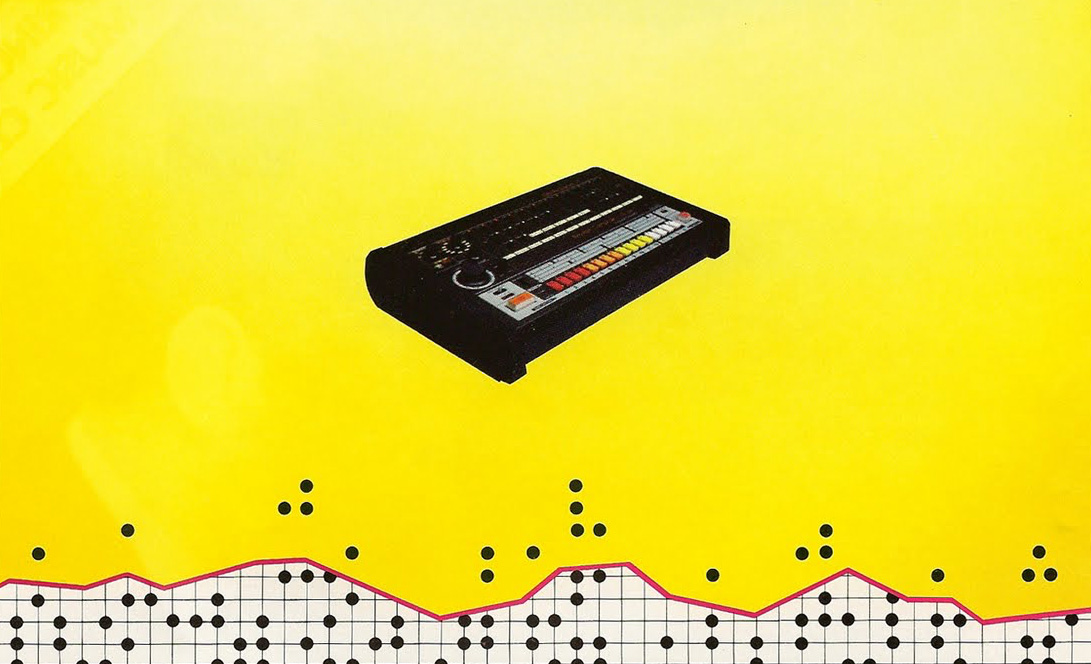
MIDI Guide is now documenting drum maps! Please see the drum map contribution guidelines and the drum map template.
Percussion-ish synths, like drum machines and samplers, use MIDI notes differently than regular synths. If you send a C-1 to your crash cymbal, do you really want it pitched down five octaves? If you have a drum machine with eight sounds, should it trigger with eight unique notes, or eight unique MIDI channels, or both?
Setting the pitch of drum sounds over MIDI is useful for some, but not all, drum machine tracks. And MIDI note information (e.g. velocity) can be either crucial or irrelevant to shaping a sample's sound. The result is that implementation details are left entirely to manufacturers.
Luckily, those manufacturers document their drum maps just as well as my beloved MIDI CCs! That is to say, they are usually:
- a scan, of a photocopy, of a fax, of the Japanese manual;
- hidden in the middle of the 150-page manual, in prose, ELEKTRON;
- part of the surviving Linear A corpus;
- reverse engineered by powerful wizards, and preserved on Usenet.
This structured synth documentation feels in-scope for the MIDI Guide project, but it doesn't fit in the existing MIDI CCs CSV. They're two different data sets that can both describe the same device, and a device might need either, or both, of them.
Because of that, I've started documenting drum maps alongside MIDI CCs, in separate, 'sibling' files. For documented drum machines, the repo will have a file named [device].triggers.csv (right next to [device].csv). And on the project website, when a device has a drum map, it gets displayed on the same page as its MIDI CC chart.
Here are some example drum maps:
- Vermona DRM1 MKIV: drum map only; no MIDI CC support
- KORG drumlogue: rich MIDI CC and MIDI note support
- Elektron Syntakt: very deep MIDI CC implementation and simple MIDI note support
The drum map format covers everything you need to know about sending a MIDI note to the device: the correct MIDI channel, note number (or range), and velocity to use, as well as configuration hints.
Like its sibling MIDI CC and NRPN data, the drum map data is offered under the Creative Commons Attribution Share Alike 4.0 International license. That means you can use it in any project (for-profit or otherwise), without contacting us, as long as you attribute the data and license any derivative under the same terms.
If you have any feedback on the format, or a request for a device, please open an issue, or email me: midi@midi.guide.
–Ben
These are the devices with drum maps as of this writing (2026-07-03):